
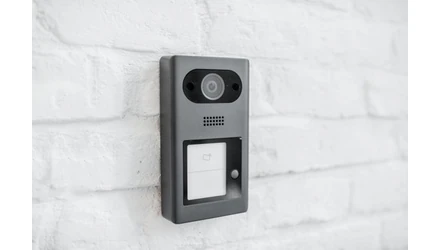
Users usually become aware of these differences when installing a new intercom system, whether during the construction of a new home or the renovation of an apartment building.
The challenge is that, to ensure reliable long-term operation, it's important to understand the advantages of each type of intercom before installation. Many intercom systems remain cost-effective over the long term when the right solution is chosen from the outset.
In this article, we'll help you understand the different types of intercom systems and show which option offers the best long-term value.
The Most Common Mistake: Focusing Only on the Installation Cost
The price of an intercom system depends largely on its technical capabilities, which are designed to meet different user needs.
For example, a video intercom not only provides two-way audio communication but also allows users to see visitors before granting access.
However, choosing the cheapest available model often means sacrificing important features.
For this reason, it isn't advisable to base your decision solely on the purchase price, as it can significantly affect long-term usability and ownership costs.
Ongoing maintenance and operation should also be taken into account.
What Costs Should You Consider When Choosing an Intercom System?
-
Cabling and installation costs
-
Maintenance expenses
-
Repair costs
-
System expansion costs
-
User management and administration
A traditional intercom uses a wired communication system. In apartment buildings, this often means that each individual apartment must be physically connected to the central unit.
Although a wired system may initially seem to involve only the purchase and installation costs, it is not always the most cost-effective solution over time.
Expanding the system—for example, when a new resident moves in or a new user needs access—can be considerably more complicated than with other types of intercom systems.
Modern solutions such as GSM intercoms transmit data through alternative communication technologies and do not require a wired indoor infrastructure. As a result, expanding the system is generally much easier and can significantly reduce additional costs.
This is because GSM intercoms do not require a dedicated indoor unit for every user. Instead, authorized users can receive calls directly on their mobile phones.
Although the initial purchase price of a GSM intercom may be higher, its lower operating and maintenance costs can make it a more economical choice in the long run.

Expanding an analog intercom system is generally more complex than expanding a GSM intercom system.
What Happens Five Years from Now? The Advantages of a GSM Intercom
A few everyday situations clearly demonstrate the differences between a traditional intercom system and a GSM intercom.
The real question isn't which system works today—it's which one remains flexible and easy to manage years down the road.
What Happens When a New Resident Moves Into an Apartment Building?
Expanding a traditional intercom system is usually a multi-step process. In most cases, adding a new resident requires the assistance of a technician.
A new indoor unit often needs to be installed, the central control unit must be reprogrammed, and the name directory usually has to be updated.
A GSM intercom works differently. Instead of being linked to an indoor handset, the system is connected directly to the user's phone number.
This means that when a new resident moves in, all that's required is to add their phone number to the list of authorized users. No new indoor unit or on-site installation work is necessary.
How Does a GSM Intercom Help When Nobody Is Home?
Today, many people have food deliveries, parcels, and other goods delivered directly to their homes, making it necessary to grant couriers access.
Traditional intercom systems cannot offer the same flexibility as GSM solutions. A conventional analog intercom requires someone to be physically present to answer the call.
If the courier arrives while the homeowner is away, the door cannot be opened.
One of the biggest advantages of a GSM intercom is remote access.
It allows homeowners to grant access not only to couriers but also to relatives, friends, or service technicians—even when they are away from the property.
This is equally useful when guests arrive earlier than expected, allowing access to be granted from virtually anywhere.
This isn't just a matter of convenience.
For business premises, holiday homes, or properties that are not occupied regularly, remote access is often essential to allow entry without the owner's physical presence.
A GSM Intercom Works Reliably Without an Internet Connection
By now, the difference between an analog intercom and a GSM system should be clear. However, GSM intercoms are often confused with IP or Wi-Fi intercom systems.
This is understandable because internet-based systems offer many of the same benefits. The key difference lies in the communication technology.
An IP or Wi-Fi intercom relies on an internet connection, while a GSM intercom uses the mobile network to transmit data.
How Does a GSM Intercom Work?
1. Signal Detection
When someone presses the doorbell, the GSM communication module detects the incoming signal.
2. Call or Notification
The system then places a call to the user's phone or, depending on the device, sends a notification through a mobile application.
3. Remote Access Control
Using the phone call or mobile app, the user can remotely unlock the gate or door.
The ideal solution depends on the installation environment. Where a reliable internet connection is unavailable—or where remote access and multi-user management are important—a GSM intercom is generally the better choice.

A GSM intercom enables gate control directly from a mobile phone.
What Can a Modern GSM Intercom Do That an Older System Can't?
ASC Global offers a wide range of GSM intercom systems. While they all operate on the same basic principle, individual models differ in capacity, functionality, and ease of use.
Support for a Large Number of Users
ASC Global InterCom systems can manage up to 1,000 phone numbers.
This allows a single system to handle access permissions for family members, tenants, employees, or even suppliers.
Gate Control via Mobile Phone
GSM technology can be used not only as an intercom but also as a remote controller for electric gates and garage doors.
Since users can operate the gate directly from their mobile phones, there is no need for a separate remote control. This eliminates common issues such as lost remotes or dead batteries.
Event Logging and Traceability
The system records access events, making it possible to review who activated the gate, when, and from where.
These capabilities make GSM intercoms a valuable addition to modern security systems.
This is particularly beneficial for business premises, apartment buildings, and locations where monitoring access and maintaining reliable remote supervision are essential.
One of the greatest advantages of a GSM gate controller is that it functions not only as an intercom but also as an intelligent access management system.
Which Option Offers Better Long-Term Value?
If the installation environment and future expansion requirements are considered from the outset, both traditional and modern intercom systems can provide a cost-effective solution.
A Traditional Intercom Is a Good Choice If:
-
It is installed in a single-family home.
-
Users are usually on-site.
-
The list of users rarely changes.
-
Remote access is not required.
A GSM Intercom Is the Better Choice If:
-
The system is used in an apartment building or commercial property.
-
Mobile phone control is important.
-
Multiple users require access.
-
Remote monitoring is needed.
-
A reliable internet connection is not available on-site.
According to the experts at ASC Global, the most important factor is not which system is newer, but which one best matches the intended application while minimizing future maintenance and upgrade requirements.